Learn / Non-Emergency Medical Transport (NEMT)
NEMT Insurance Explained: What Tennessee & Georgia Providers Actually Need
Updated 2026-07-04 · reviewed by a licensed agent
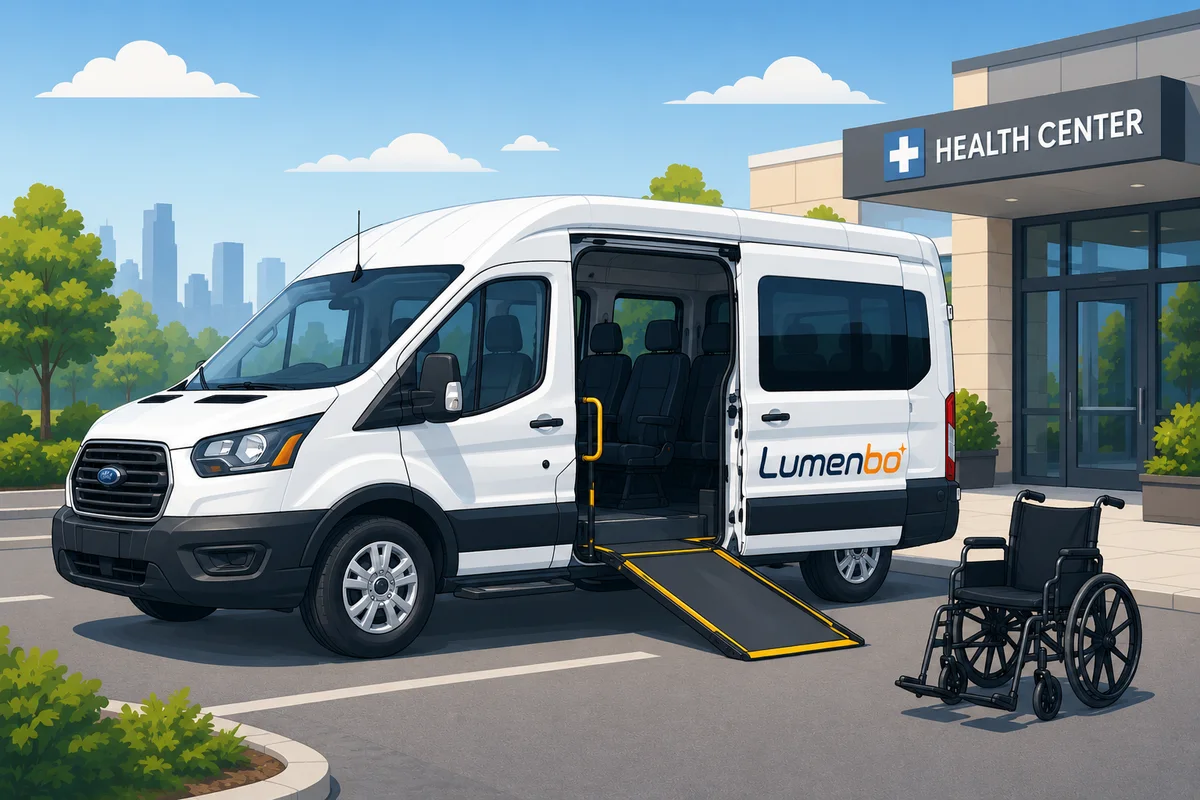
If you move people to and from medical appointments for a fee in Tennessee or Georgia — wheelchair or ambulatory, whether your rides come through Verida (formerly Southeastrans), Tennessee Carriers, Modivcare (formerly LogistiCare), or a local county contract — you are running a for-hire passenger transportation business. Personal auto insurance will not cover it. NEMT insurance is a package of commercial coverages built around that reality: a commercial auto policy rated for livery, plus the liability, physical-damage, and specialty coverages your work (and your broker contract) demand.
Here's what those coverages are, what the brokers expect, what drives the price in TN and GA, and why getting bigger can actually make you cheaper per vehicle.
What "NEMT insurance" really means
There's no single product called "NEMT insurance." It's a stack of coverages assembled to fit a non-emergency medical transport operation:
- Commercial auto liability — the core. Pays for bodily injury and property damage you're legally responsible for. This is the coverage your broker contract, your state, and any vehicle lienholder all care about.
- Auto physical damage (comprehensive and collision) — repairs or replaces your own vans after a crash, theft, fire, hail, or vandalism.
- General liability — non-auto incidents: a passenger who slips during loading, an injury at your office.
- Abuse & molestation (SAM) / professional liability (E&O) — increasingly required, because your drivers help load, secure, and sometimes lift passengers one-on-one. It protects you if someone claims they were handled improperly — accident or not.
- Workers' compensation — for employee drivers who get hurt on the job.
- Hired & non-owned auto — usually a contractual requirement from the broker even if you never rent or use personal vehicles for the business.
- Umbrella / excess liability — extra limits above your primary policies. Worth knowing up front: excess coverage that sits over NEMT commercial auto is genuinely hard to place and expensive, so it's rarely the easy "just add more" button a broker rep might assume. Carry the right primary limits and be skeptical of inflated requirements (see the broker requirements guide).
Most operators start with commercial auto liability and physical damage, then add the rest as their contract and payroll require.
Why NEMT is its own risk class
Insurers price by how a vehicle is used, not just what it is. A minivan running family errands and the same minivan carrying Medicaid patients to dialysis are two entirely different risks:
- It's for-hire. Carrying passengers for a fee is expressly excluded by personal auto policies — that alone moves you into commercial territory.
- The passengers are higher-exposure. Elderly, disabled, and medically fragile riders mean more assistance, more loading and unloading, and more severe claims when something goes wrong.
- You're on the road constantly. More miles and more stops than a typical commercial vehicle means more frequency of loss.
That's why a standard commercial auto carrier may decline NEMT, and why buying the right specialty coverage matters — a denied claim on the wrong policy can end a young business.
What your broker contract requires
Verida, Tennessee Carriers, and Modivcare don't just book your rides — their provider agreements set your insurance floor. Requirements vary by broker, state, and contract version, but they commonly include a $1,000,000 combined single limit on auto liability, general liability, workers' comp where required, hired & non-owned auto, and naming the broker (and sometimes the state Medicaid agency) as an additional insured or certificate holder. Some require abuse & molestation or E&O coverage.
The exact numbers and endorsements are spelled out in your agreement — read them before you buy. We break the requirements down in Insurance requirements for Verida & Modivcare providers.
What underwriters look at
When you request a quote, expect underwriters to weigh:
- Driver records (MVRs) — the single biggest lever. A couple of bad MVRs can spike your premium or get you declined.
- Vehicle types — ambulatory vans, wheelchair-accessible vehicles with lifts, and stretcher vans are rated differently.
- Level of service — ambulatory-only is lower risk than wheelchair or stretcher transport (and wheelchair trips tend to pay providers better).
- Radius of operation — local, in-town routes look different than long, intercity runs.
- Experience and loss history — a brand-new venture is underwritten more cautiously; prior claims follow you.
What it costs — and the scaling advantage
Premiums vary too much to quote a single number honestly; anyone who gives you a flat figure before seeing your vehicles and drivers is guessing. The real drivers are vehicle and driver count, your required liability limit, MVRs, vehicle values, service area, and loss history.
But here's the lever most new operators miss: growth lowers your cost per vehicle. Each van adds auto premium, but general liability, the SAM endorsement (or E&O), and hired & non-owned are largely once per policy. Going from 1–2 vans to 5–6 spreads those fixed pieces across more vehicles — so each one gets cheaper. Brokers spend their energy recruiting new single-vehicle operators; almost no one tells existing providers that scaling is the affordability play.
Tennessee and Georgia specifics
- Tennessee — TennCare NEMT runs largely through Tennessee Carriers (the state's largest broker) and Verida. Standard TN commercial-auto and workers'-comp rules apply.
- Georgia — Verida is consolidating all five Georgia Medicaid regions as of April 1, 2026 (Modivcare is exiting Central, Southwest, and East), so nearly every GA provider is onboarding to Verida's requirements right now. At the same time, Georgia's tort-reform climate has firmed liability pricing and pushed some carriers away from certain passenger transport — but the right markets still write wheelchair and ambulatory NEMT, and rising rates mean more providers are shopping.
Lumenbo focuses on Tennessee and Georgia first (and the surrounding Southeast). If you operate here, we can match you with one licensed agent who actually knows NEMT and for-hire risk.
Get covered before your first ride
You can't legally transport for a fee — or sign most broker contracts — without the right commercial coverage in force. Line up your vehicle list, your driver roster with license numbers, and your contract's insurance requirements, and get a real quote against them.
Start a quote with Lumenbo and we'll match you with one licensed local agent who works NEMT — not a call center, and not five agencies fighting over your info. Or browse the Learning Library for more.
What is Lumenbo? Lumenbo is an insurance matching platform that connects people with one licensed local independent agency — and the software those agencies run on. Lumenbo is not an insurance carrier and not an insurance agency. Your Lumenbo-matched agent is a licensed agent at that partner agency, and they stay your point of contact.
Frequently asked
Do I need commercial auto insurance for NEMT in Tennessee or Georgia?
Yes. A personal auto policy excludes livery and for-hire transport, so it won't cover a vehicle used to carry passengers for a fee — in TN, GA, or anywhere. NEMT operators need a commercial auto policy rated for for-hire passenger transportation. Using personal auto instead usually means a denied claim and a canceled policy.
What insurance does Verida or Modivcare require from providers?
Broker contracts commonly require $1,000,000 in combined single limit auto liability, general liability, workers' compensation where the state requires it, hired & non-owned auto, and naming the broker (and often the state) as an additional insured or certificate holder. Exact limits and endorsements are in your provider agreement — see our guide to broker insurance requirements and always verify against your specific contract.
Is NEMT insurance more expensive in Georgia right now?
Often, yes. Georgia's tort-reform environment has pushed liability pricing up and led some carriers to pull back from certain passenger transport (especially charter van/bus). Wheelchair and ambulatory NEMT is still being written by the right markets — but rates have firmed, which is exactly why more providers are shopping.
Does adding vehicles make my NEMT insurance cost more?
Each vehicle adds auto premium, but the cost isn't linear. General liability, the abuse & molestation (SAM) endorsement or E&O, and hired & non-owned coverage are largely once-per-policy — so growing from 1–2 vans to 5–6 usually lowers your cost per vehicle. Scaling is one of the few reliable ways to get more affordable.
Do I need workers' compensation for my NEMT drivers?
If you have employees, most states (including TN and GA) require workers' compensation — and NEMT drivers who lift, assist, and secure passengers do get hurt. Whether 1099 drivers count varies by state and by how you actually engage them; misclassifying drivers is a common and expensive mistake.
Ready to get matched? One licensed local agent. No shared leads, no spam.
Start your quote
This article is general information for education, not insurance advice or a quote. Coverage, availability, and rules vary by insurer and by state.