Learn / Homeowners insurance (Tennessee)
Does Homeowners Insurance Cover a Fallen Tree in Tennessee? (Your Tree, Your Neighbor's, and the Ice-Storm Rules)
Updated 2026-11-10 · reviewed by a licensed agent
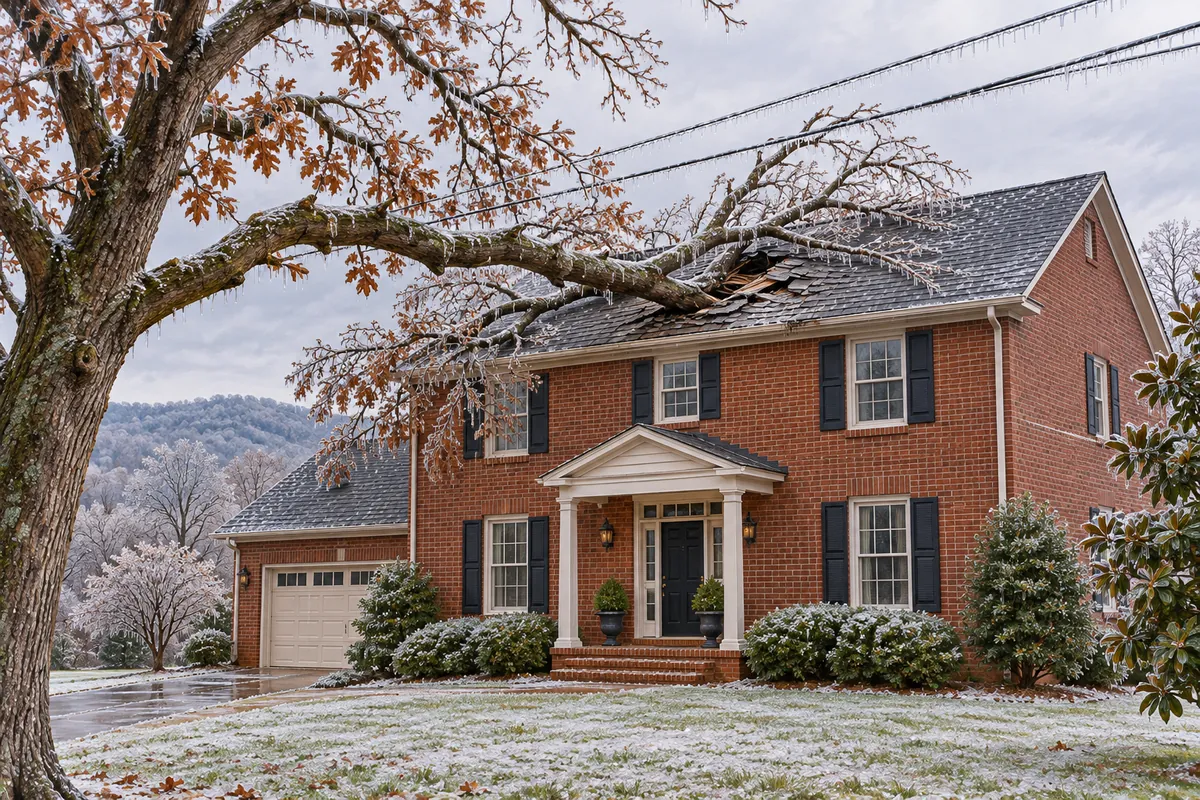
Yes, if the tree hits something covered — your house, garage, fence or shed — your homeowners policy usually pays, and it doesn't matter whether it was your tree or your neighbor's. The policy repairs the structure, removes the tree from it, replaces damaged belongings, and pays for a hotel if the house is unlivable. What it usually doesn't pay for is a tree that falls and hits nothing; removal then is generally on you, with a small exception if it blocks your driveway. Two details catch Tennessee homeowners off guard: a tree on your car is an auto claim, not a home claim, and whether wind or ice brought it down can decide which deductible applies.
Who pays when a tree falls?
It depends on what the tree hits, not whose yard it grew in.
| What happened | Whose policy pays | What's usually covered |
|---|---|---|
| Your tree falls on your house, garage, fence or shed | Your homeowners policy | Repairs, removing the tree from the structure, damaged contents, extra living expenses |
| Your neighbor's tree falls on your house | Your homeowners policy | Same as above; your insurer may pursue the neighbor if they were negligent |
| Your tree falls on your neighbor's house | Their homeowners policy | You're liable only if you were negligent (a tree you knew was dead or dangerous) |
| A tree falls on your car | Your auto policy's comprehensive coverage | Car repairs, minus your comprehensive deductible |
| A tree falls in the yard and hits nothing | Usually no one | Removal is your cost, except the blocked-driveway rule below |
| A tree blocks your driveway or an accessibility ramp | Your homeowners policy, limited | Removal, typically up to $500 per tree and $1,000 per loss, if wind, hail, ice, snow or sleet brought it down |
| A city or utility tree falls on your house | Your homeowners policy first | Your insurer may pursue the owner if they were negligent |
The surprise for most people is the neighbor row. Homeowners insurance follows the property that was damaged, not the tree. Your insurer pays you and then decides whether there's a case against the neighbor — which usually requires showing the tree was visibly dead, diseased or leaning, and the neighbor knew it. If you've told a neighbor in writing that their tree looks dangerous, keep a copy.
Which deductible applies — wind or ice?
On many Tennessee policies, the cause of the fall decides the deductible. Carriers here increasingly carry a separate percentage wind/hail deductible — often 1% or 2% of your dwelling limit — that applies to losses caused by windstorm or hail, alongside a flat all-other-perils deductible for everything else.
| What brought the tree down | Deductible that usually applies | On a $500,000 dwelling limit |
|---|---|---|
| A thunderstorm, straight-line winds, a tornado | Wind/hail deductible, if your policy has one | $5,000 at 1%, $10,000 at 2% |
| The weight of ice or snow, as in an ice storm | All-other-perils deductible | Often $1,000–$2,500 |
| Lightning | All-other-perils deductible | Often $1,000–$2,500 |
Policy wording varies, and some storms involve both wind and ice. Describe what actually happened when you file, and check the deductible section on your declarations page now rather than after the next storm. How percentage deductibles really work, and the wind/hail deductible in detail.
Does insurance pay to remove a fallen tree?
Only when it hits something covered, or blocks the way in or out.
- Tree on the house or another structure: Removing it from the structure is part of the claim. Removing the trunk from the yard afterward may fall under the limited debris-removal coverage.
- Tree blocking the driveway or an accessibility ramp: Standard forms cover removal when wind, hail, or the weight of ice, snow or sleet felled the tree and it blocks a vehicle from getting in or out, or blocks a ramp built for a person with a disability — typically up to $500 per tree and $1,000 per loss.
- Tree down in the yard, nothing damaged: Generally your cost.
- Replacing the tree: Landscaping is covered only for a short list of perils — fire, lightning, vandalism, a vehicle you don't own — and not wind or ice, with caps around $500 per tree and 5% of your dwelling limit.
What happened in the January 2026 ice storm?
It was the textbook tree-claim event. In late January 2026, freezing rain coated Middle Tennessee, and ice-loaded limbs snapped across neighborhoods. At the peak, more than 230,000 Nashville Electric Service customers — nearly half the system — lost power, many for a week or more. An independent review later found vegetation was a major factor and that NES had been carrying a backlog of roughly 800 miles of overdue tree trimming going into the storm.
The insurance lessons from that week hold for the next one. Tennessee's Department of Commerce and Insurance told homeowners that structural damage from ice-felled trees is generally covered, while yard debris and general cleanup usually aren't. And the same storm produced a second wave of claims days later: frozen and burst pipes in houses that lost heat — which work differently, and are covered here.
What should I do after a tree falls on my house?
- Get everyone out of danger and stay away from downed lines. Assume any wire is live and call the utility.
- Photograph and video everything — the tree, where it hit, inside and out — before anything is moved.
- Prevent more damage. Tarp the roof opening and board broken windows. Reasonable emergency work to protect the house is part of the claim; keep every receipt.
- Call your agent or the carrier's claim line the same day. In a regional storm, the queue grows fast.
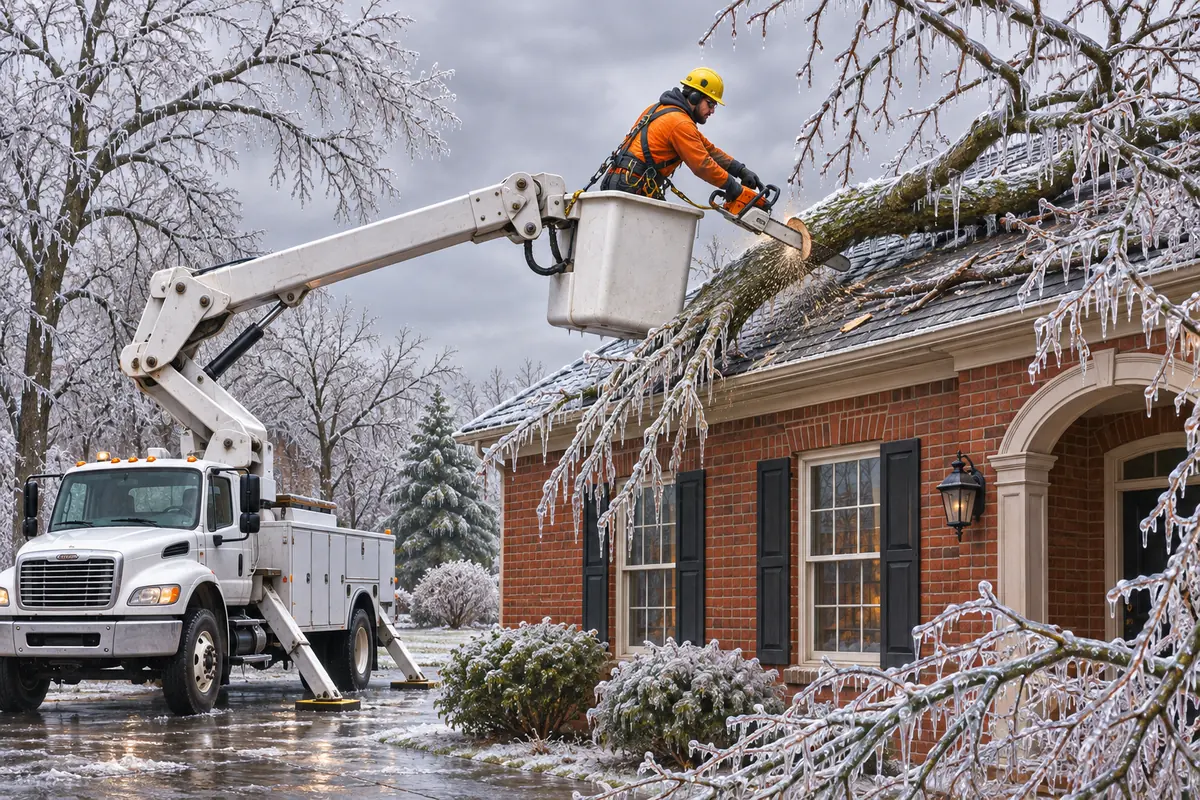
- Get the tree off the house safely. A professional tree service with proper equipment and insurance — not a ladder and a chainsaw. Ask for itemized invoices separating removal from the structure and cleanup of the yard.
- File the car separately. A tree on your car goes to your auto carrier under comprehensive. How comprehensive works.
- Hire carefully. Storm chasers follow ice storms. In Tennessee, contractors generally can't require more than a one-third down payment, licenses can be checked at verify.tn.gov, and anyone offering to "cover your deductible" is offering something illegal here. The same red flags apply as after a hail storm.
How do I keep a tree from becoming a claim — or a lawsuit?
Deal with the obvious ones before the storm does. Dead or hollow trunks, large dead limbs over the roof or driveway, trees leaning toward the house, and mushrooms or cavities at the base are the warning signs. An arborist's inspection costs far less than a deductible, and taking down a dead tree near a property line protects you against a negligence claim if it lands on the neighbor's house. Keep invoices; they're evidence of reasonable maintenance.
Know which deductible you have before the next storm
A tree through the roof is one of the most reliably covered claims in homeownership. The surprises are in the details — which deductible applies, what removal pays, and whose policy responds — and those are worth knowing in October, not in January.
Start a quote with Lumenbo and we'll match you with one licensed local independent agency — their agent can show you exactly which deductibles your policy carries for wind versus ice, check your debris-removal and other-structures limits, and compare carriers if your wind/hail deductible has crept up. More on Tennessee storms in storm damage and roof claims, and more straight answers in the Learning Library.
Informational only — not a quote or a coverage determination. Debris-removal, landscaping and deductible provisions vary by carrier and policy form; the limits described are typical of standard forms but your policy controls.
What is Lumenbo? Lumenbo is an insurance matching platform that connects people with one licensed local independent agency — and the software those agencies run on. Lumenbo is not an insurance carrier and not an insurance agency. Your Lumenbo-matched agent is a licensed agent at that partner agency, and they stay your point of contact.
Frequently asked
Does homeowners insurance cover a tree falling on my house?
Yes, in almost every standard policy, when the tree was brought down by a covered peril like wind, ice, snow or lightning. The policy pays to repair the house and other structures it hits — a fence, shed or detached garage — replaces damaged belongings, removes the tree from the structure, and pays for a place to stay if the house is unlivable. Your deductible applies, and which deductible depends on what brought the tree down.
My neighbor's tree fell on my house. Whose insurance pays?
Usually yours. Your homeowners policy covers damage to your house regardless of whose tree caused it. Your neighbor is generally responsible only if they were negligent — for example, the tree was visibly dead or diseased and they knew it. In that case your insurer may recover what it paid, and possibly your deductible, from the neighbor's liability coverage.
Will insurance pay to remove a tree that fell but didn't hit anything?
Usually not. Standard policies pay to remove a fallen tree only when it damages a covered structure, or — under the debris-removal provision — when wind, hail, or the weight of ice, snow or sleet brings it down and it blocks your driveway or an accessibility ramp. That coverage is typically capped at $1,000 per loss and $500 per tree. A tree that falls across the back yard without hitting anything is usually your cost.
Does the wind/hail deductible apply to a fallen tree?
It can. Many Tennessee policies apply a separate percentage wind/hail deductible to losses caused by windstorm. If wind brought the tree down, that deductible may apply; if the weight of ice or snow did, your regular all-other-perils deductible usually applies instead. Read the deductible section of your declarations page, and describe the cause accurately when you file.
Does homeowners insurance cover a tree that falls on my car?
No. Damage to your car is covered by the comprehensive coverage on your auto policy, not your homeowners policy, whether the tree was yours or your neighbor's. If you don't carry comprehensive, the damage to the car usually isn't covered.
Does insurance cover a dead tree I knew about?
It can create problems. Insurers expect reasonable maintenance, and a tree that was obviously dead or rotting before the storm invites a negligence argument — especially if it falls on a neighbor's property. If a tree looks dead or hollow, have an arborist look at it and take it down before it comes down on its own.
Does homeowners insurance pay to replace trees and landscaping?
Only in limited cases. Standard policies cover trees, shrubs and plants for a short list of perils such as fire, lightning, vandalism, and a vehicle you don't own — but not wind or ice — and typically cap it at $500 per tree and 5% of your dwelling limit in total. A storm that topples a mature oak usually doesn't pay to replace the oak.
Ready to get matched? One licensed local agent. No shared leads, no spam.
Start your quote
This article is general information for education, not insurance advice or a quote. Coverage, availability, and rules vary by insurer and by state.