Learn / Homeowners insurance (Tennessee)
Your $800k Home Is Now a "Million-Dollar Home": What Crossing That Line Does to Your Insurance in Tennessee
Updated 2026-07-04 · reviewed by a licensed agent
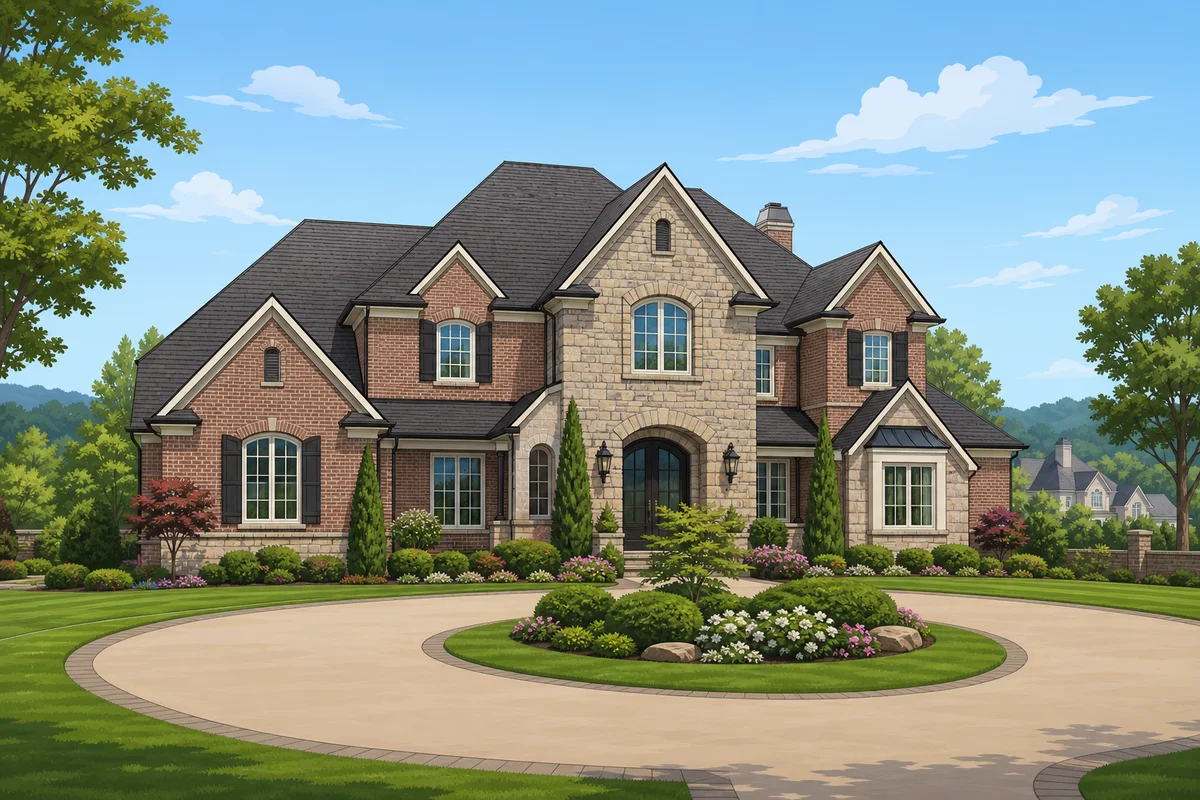
If you own a home in Williamson County or anywhere in middle Tennessee, inflation may have quietly pushed it over $1,000,000 — same house, same bricks and studs, bigger number. What that does to your insurance depends heavily on who you're insured with and who's advising you. Done right, it's a chance to get insured correctly. Done wrong, you either overpay every year or get stung at claim time.
Here's the honest map.
How an "average" home became a "million-dollar home"
Five or six years ago, a 4,500-square-foot middle-Tennessee home might have been valued around $800,000. Then construction costs exploded — replacement costs (labor and materials to rebuild) rose about 45% between 2020 and 2023 — and carriers, which raise your Coverage A for inflation every year, followed the market up. That same home is now valued at $1,000,000–$1,100,000. Nothing about the house changed. The number did.
Rising Coverage A is mostly a good thing — it protects you against rebuild inflation. But it can quietly climb past what you actually need, and it drags your premium (and your percentage deductible) up with it.
Where you're insured matters more than the number
Crossing $1M plays out very differently depending on your carrier:
Captive/national carriers (State Farm, Farm Bureau, Allstate). This is usually where the frustration starts. These companies often have limited appetite for higher-value homes, and they can struggle to pair a high-value home with the right auto (say, a home and an exotic in the garage). Cross the million-dollar line with a captive and you may hit walls — narrow options and a rigid, one-size product.
Preferred, independent carriers. The kind an independent agency represents handle homes very well up to roughly $2 million. There's still that real, somewhat invisible premium bump around $1M — largely because the estimator auto-inflates your Coverage A. The practical fix many people never hear: ask the carrier to run a fresh, full replacement-cost estimate rather than accept the automatic inflationary bump. With some carriers, that right-sizes the limit — and the premium.
High-value / private-client carriers (like Chubb). Built for luxury and custom homes: cash settlement at a total loss, very high liability limits, white-glove claims. They can be surprisingly competitive — sometimes a private-client quote rating your home at $2M lands close to a preferred carrier rating the same home at $1.4M — and they bundle in niceties. But a higher Coverage A cuts both ways, which is the part most people miss.
Higher replacement cost ≠ better coverage
This is the insight that saves people money. If a preferred carrier says your rebuild is $1.4M and a private-client carrier says $2M, you are not getting more with the $2M policy — you're paying premium on $2M. Here's why that matters:
- You may already be protected without the bigger number. Some preferred carriers offer a guaranteed replacement cost endorsement: if your home burns, they rebuild it fully at the time of loss even if it costs more than the limit. You don't need an inflated Coverage A to be made whole.
- A private-client carrier won't over-build, either. After a fire or tornado they rebuild to your home's original quality. If that takes $1.4M, the extra $600k of coverage was premium you paid but never got to use.
- The percentage-deductible multiplier. A 1% deductible is 1% of Coverage A — $14,000 at $1.4M, but $20,000 at $2M. That $6,000 gap is the difference between a partial roof and a full roof out of your pocket. Paying ~$200 more a year to "save" that $6,000 at claim time is a 30-year break-even — and you will need a roof within 30 years. The bigger policy can quietly cost you when you actually file.
It's about fit, not a rule
Sometimes moving up to a private-client carrier is exactly right; sometimes moving back to a preferred carrier is. Real examples:
- A $1.4M home and a Lamborghini in the driveway. A standard carrier may not want to insure both — you need a carrier that can do the high-value home and the exotic auto together (some can). Here, moving up makes sense.
- A $1.7M home with a 2019 Honda Pilot and a 2022 F-150. You probably don't need agreed-value auto or the full private-client package. A preferred carrier's premier tier can be more than enough — often with lower, flat deductibles instead of percentages. Here, staying (or moving back) is smarter.
- A captive home that crossed $1M and got shopped into private-client quotes that came back more expensive and/or with a worse wind/hail deductible. We're completely comfortable moving that home to a preferred carrier at a right-sized ~$1.4M rebuild — especially when Zillow says $1.4M and a big chunk of that is Williamson County land and location, which we don't even insure.
What most agents get wrong
Most agents do one of two things: upsell you into "high value" for coverage you may never use, or sell you the cheapest option and ignore what it does to your percentage deductible. Neither is advice. The right answer is matching the pieces — real rebuild cost vs. market value, your specific vehicles, your deductible structure, and whether you have guaranteed replacement. That takes a relationship, not a rushed quote.
Get a second opinion that actually weighs the pieces
The agents we match you with carry both preferred and high-value/private-client markets, so you land where you truly fit — up or back — and right-size your rebuild cost instead of just accepting an inflated one.
Start a quote with Lumenbo and we'll give you a straight read on your home. And don't miss the sneaky one that applies at every price point: how a percentage deductible really works, and standalone wind & hail deductible coverage.
What is Lumenbo? Lumenbo is an insurance matching platform that connects people with one licensed local independent agency — and the software those agencies run on. Lumenbo is not an insurance carrier and not an insurance agency. Your Lumenbo-matched agent is a licensed agent at that partner agency, and they stay your point of contact.
Frequently asked
Why did my premium jump when my home value crossed $1 million?
Two reasons stack up. Rebuild costs genuinely rose (replacement costs climbed ~45% from 2020–2023), and many carriers auto-adjust your Coverage A upward for inflation every year — so your dwelling limit (and the premium on it) creeps up. There's also a real, somewhat invisible bump around the $1M mark with some carriers. One practical fix: ask your carrier to run a fresh, full replacement-cost estimate instead of accepting the automatic inflationary adjustment — with some carriers that right-sizes both the limit and the premium.
Does a higher replacement cost mean I'm getting better coverage?
No — and this is the big misunderstanding. If one carrier rates your rebuild at $1.4M and another at $2M, the $2M policy isn't giving you more; you're just paying premium on $2M. A carrier rebuilds your home to its original quality after a loss — if that takes $1.4M, the extra $600k of coverage was premium you paid but never used. And a higher limit directly inflates a percentage-based deductible (a 1% deductible is $14,000 at $1.4M but $20,000 at $2M).
What's the difference between my home's market value and its rebuild cost?
Market value (what Zillow shows, what you'd sell for) includes your land and location — which we don't insure. Rebuild cost is just the structure. In places like Williamson County, a big share of market value is the lot and the neighborhood, so the actual rebuild number is often well below the market price. Insuring to market value usually means over-insuring.
Are high-value carriers like Chubb worth it?
Sometimes, absolutely — for the right home and household they can be surprisingly competitive and add real niceties (cash settlement at a total loss, very high liability limits, white-glove claims). Other times you're paying for coverage you won't use, or walking into a bigger percentage deductible. It's a fit question, not a status upgrade — the right answer depends on your home, your vehicles, and your deductible structure.
I'm frustrated with my current carrier — do I have to switch agencies too?
No. If you're simply unhappy with one specific carrier, come to us and we'll match you with an agent who can shop every other carrier — your agent can place you almost anywhere except the one you're leaving. The goal is to match you to the right fit, not to talk you into (or out of) any single company.
Ready to get matched? One licensed local agent. No shared leads, no spam.
Start your quote
This article is general information for education, not insurance advice or a quote. Coverage, availability, and rules vary by insurer and by state.