Learn / Non-Emergency Medical Transport (NEMT)
Wheelchair Transportation Insurance for NEMT Providers (Tennessee & Georgia)
Updated 2026-07-04 · reviewed by a licensed agent
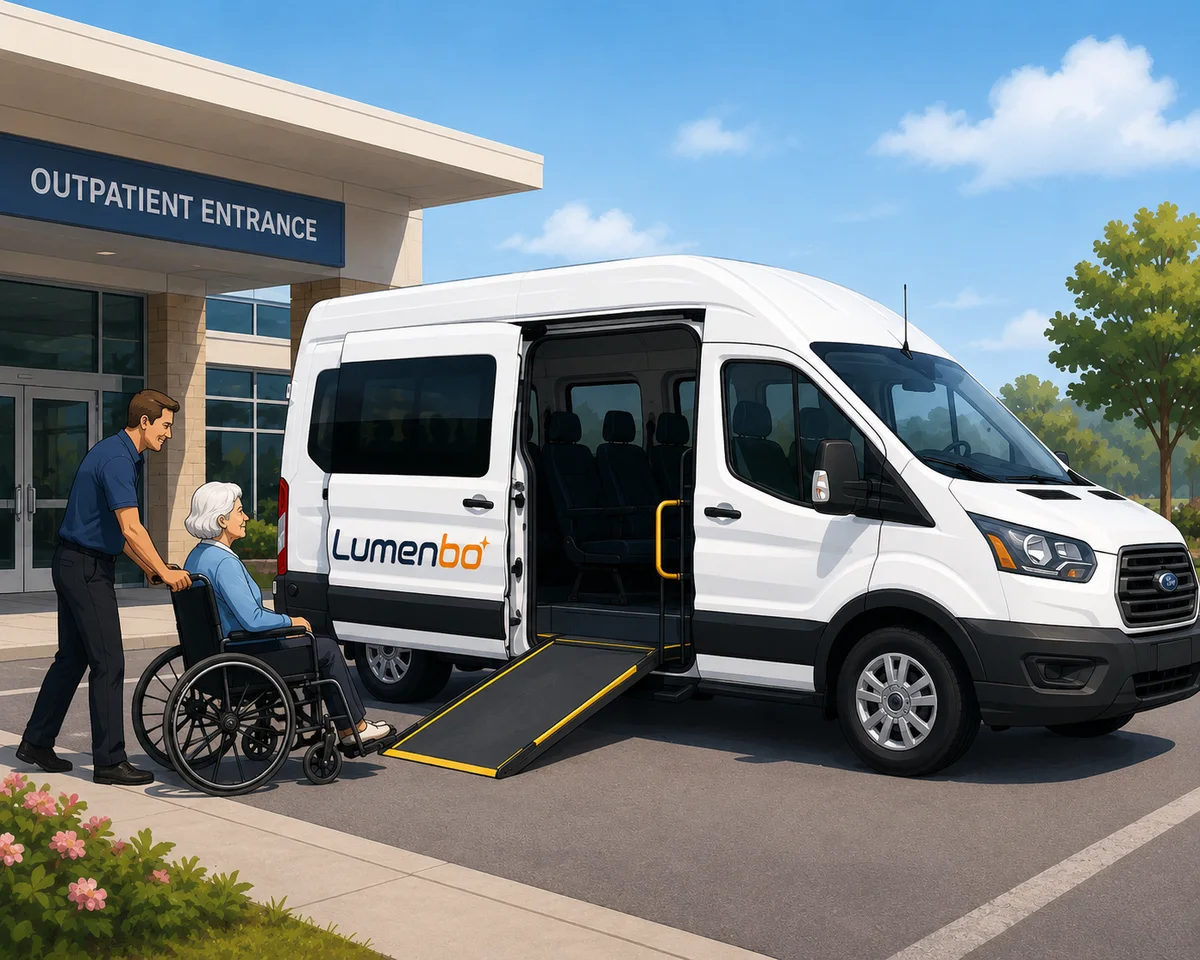
Most local NEMT providers in Tennessee and Georgia run some mix of ambulatory (riders who can walk and transfer on their own) and wheelchair trips. A smaller, specialized group runs stretcher transport. Those three service levels are insured differently — and the wheelchair tier is where most of the opportunity sits.
Here's how wheelchair transportation changes your insurance, and why it's the niche worth building around.
Ambulatory vs. wheelchair vs. stretcher
- Ambulatory — the lowest-risk tier. Standard van or sedan, riders board themselves. Lowest rating, but also the lowest-paying trips.
- Wheelchair — a wheelchair-accessible vehicle (WAV) with a lift or ramp. The driver positions, loads, and secures the passenger and chair. Higher rating than ambulatory — and higher trip pay. This is what most people mean by "NEMT," and it's the local sweet spot.
- Stretcher — a specialty case (often long-distance, sometimes with a nurse aboard). Higher risk, higher limits, much less common. Great work if you can get it, but harder to come by; most local providers don't do it.
Why wheelchair vehicles are rated differently
A wheelchair-accessible van isn't just a bigger vehicle — it's a modified one carrying a higher-need passenger:
- Vehicle value. The lift or ramp conversion adds real cost. Your physical damage coverage should reflect the converted value, or a total loss won't actually replace the van.
- Securement exposure. The moments of loading, positioning, and tying down a chair are where injuries and claims happen. That pushes weight onto general liability and makes an abuse & molestation (SAM) or E&O endorsement more relevant — your driver is physically assisting a vulnerable passenger, so a claim of improper handling (accident or not) is a live risk.
- Passenger profile. Wheelchair riders are, on average, more medically fragile, which underwriters factor into severity.
None of this makes wheelchair NEMT uninsurable — it just means it needs a policy built for it, priced by an agent who understands the service level rather than treating your van like a delivery vehicle.
Why wheelchair is the better-paying niche
Brokers and payers generally reimburse more for a wheelchair trip than an ambulatory one. So a provider who can run WAVs earns better per run and has a stronger, more defensible book of business. Many providers who offer wheelchair still do mostly ambulatory day to day — but having the wheelchair capability is what raises your ceiling. If you're deciding where to invest, wheelchair capacity usually pays for itself.
What carriers look at
For wheelchair operations, underwriters weigh the same levers as any NEMT risk — driver MVRs, vehicle values, radius, and loss history — plus the securement/passenger-assist exposure specific to wheelchair work. Clean driving records and documented securement/safety practices are the strongest things in your control.
Tennessee & Georgia
Wheelchair and ambulatory NEMT is exactly the local work that runs through Verida, Tennessee Carriers, and (for now) Modivcare in TN and GA — and it's still being written by the right markets even as Georgia's tort-reform climate firms up pricing. This is Lumenbo's home turf.
Get a quote built for wheelchair work
Make sure your quote reflects your actual service level and vehicle values — under-covering a converted WAV is a costly surprise at claim time.
Start a quote with Lumenbo and we'll match you with one licensed agent who rates wheelchair NEMT correctly. Start with the NEMT insurance guide, and if you contract through a broker, see the broker requirements guide.
What is Lumenbo? Lumenbo is an insurance matching platform that connects people with one licensed local independent agency — and the software those agencies run on. Lumenbo is not an insurance carrier and not an insurance agency. Your Lumenbo-matched agent is a licensed agent at that partner agency, and they stay your point of contact.
Frequently asked
Is wheelchair transportation insurance different from regular NEMT insurance?
It's the same core stack — commercial auto liability, physical damage, general liability, and often abuse & molestation (SAM) or E&O — but wheelchair-accessible vehicles are rated differently. The lift or ramp, the vehicle's higher value, and the added exposure of securing a passenger in a chair all factor into the premium.
Why do wheelchair trips matter so much for NEMT providers?
Wheelchair trips generally pay providers more than ambulatory trips, so a provider who can run wheelchair-accessible vehicles usually earns better per run. That's why wheelchair capability — not stretcher, which most local providers don't do — is the sweet spot of local NEMT.
Do I need special coverage for the wheelchair lift or ramp?
The modified vehicle's value (including the lift/ramp conversion) should be reflected in your physical damage coverage so a total loss actually replaces the vehicle. And because securing and loading a passenger in a chair is where injuries happen, general liability and a SAM/E&O endorsement matter more here, not less.
What about stretcher transport?
Stretcher (and long-distance stretcher with a nurse) is a specialty case — higher risk, rated higher, and much less common than local wheelchair/ambulatory work. Most local providers don't do it. If you do, expect different underwriting and often higher limits.
Does wheelchair NEMT cost more to insure than ambulatory?
Often somewhat more, because of the vehicle value and the securement exposure — but the better trip pay usually more than offsets it. And the fixed parts of your policy (general liability, SAM, hired & non-owned) don't multiply per vehicle, so scaling still lowers your cost per van.
Ready to get matched? One licensed local agent. No shared leads, no spam.
Start your quote
This article is general information for education, not insurance advice or a quote. Coverage, availability, and rules vary by insurer and by state.