Learn / Rental & short-term rental (Tennessee)
A Guest Got Hurt (or Trashed the Place) at Your Rental — Who Pays?
Updated 2026-08-25 · reviewed by a licensed agent
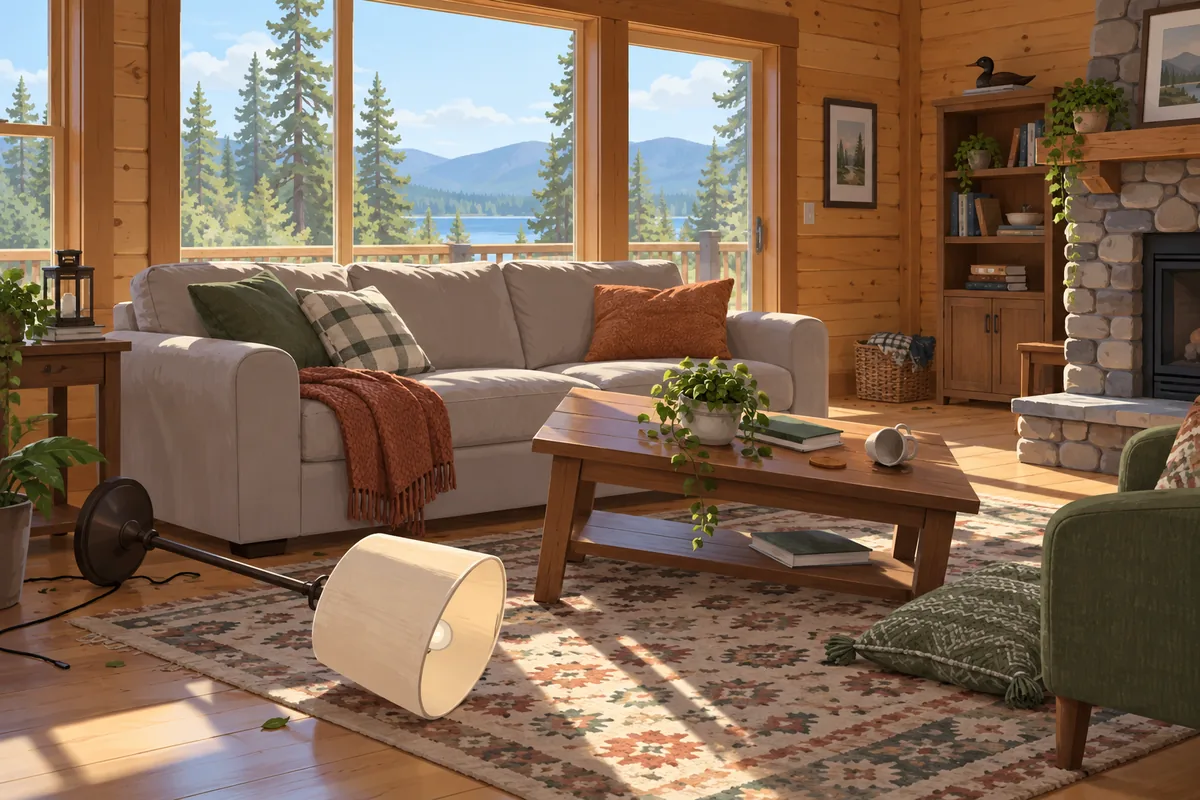
Usually you pay first — unless real coverage is in place. When a guest falls down the cabin stairs or a bachelorette party ruins the furniture, the platform protections most hosts are counting on turn out to be two very different things: one is actual insurance with real exclusions, the other isn't insurance at all. Here's how each scenario actually gets paid — and where a Tennessee host's own policy has to do the work.
Guest injury and guest damage are two different problems
They feel like one topic — "something went wrong during a stay" — but insurance treats them as opposites, and so should you.
| What happened | What kind of problem it is | What responds |
|---|---|---|
| Guest is injured (stairs, deck, hot tub, dog bite) | Liability — they may claim against you | Your STR policy's liability coverage; Airbnb's Host Liability Insurance as a backstop |
| Guest damages your property (furniture, walls, smoke, pet mess) | Property — you're claiming for yourself | Your STR policy's building/contents coverage; Airbnb's Host Damage Protection as a first ask |
The injury side is the one that can reach your personal assets. The damage side is the one that eats your profit a few hundred dollars at a time. A real short-term-rental policy is built to handle both; the platform programs each handle half, partially.
Who's responsible when a guest gets hurt?
Tennessee premises-liability law asks a simple question: did the host know — or should they have known — about the hazard, and did they fix it or warn about it? A rotted deck board, a stairway with no handrail or lighting, a hot tub with a failed cover latch, a bunk bed with no rail in the kids' room: if it was foreseeable and unaddressed, the host owns it.
Two Tennessee specifics worth knowing. First, fault is shared here: Tennessee uses modified comparative fault, so a guest who was 50% or more at fault for their own injury generally recovers nothing, and a partially-at-fault guest's recovery is reduced. Second, the clock is short — generally one year for injury claims, among the shortest in the country (Georgia allows two). Short deadline or not, report any injury to your insurer right away; late notice complicates covered claims.
The practical short list for cabins and STRs: hot tubs, decks and exterior stairs, bunk rooms, and anything involving water or height (the Smoky Mountain cabin version of this list adds wildfire and amenity underwriting on top). If your listing has them, your liability limit — not your nightly rate — is the number that matters most on the policy.
What does Airbnb actually provide?
AirCover for Hosts bundles two programs that hosts constantly mix up:
| Host Liability Insurance | Host Damage Protection | |
|---|---|---|
| For | Guest injuries / third-party claims | Guest-caused damage to your property |
| Limit | $1M per occurrence | Up to $3M |
| Is it insurance? | Yes — real third-party insurance | No — a reimbursement program under Airbnb's terms |
| Key catches | Excludes intentional acts and several other categories; Airbnb stays only | Ask the guest first via the Resolution Center; escalate within 14 days or before next check-in; wear-and-tear excluded; Airbnb decides the payout |
The damage-side deadline deserves emphasis: 14 days or before the next check-in, whichever comes first. On a back-to-back weekend in peak season, your evidence window is the length of a cleaning shift. Photograph everything at every turnover — it's the only way the deadline is survivable.
And because Host Damage Protection is a program rather than a regulated insurance policy, there's no state insurance regulator behind it and no adjuster who works for you. Hosts who've been through it tend to describe the payouts the same way: something, eventually, but rarely replacement cost. That's the gap between AirCover and actual coverage in one sentence.
VRBO's version: $1M of host liability is included, but damage runs through guest-paid deposits or guest-purchased damage protection. And a direct booking — your own site, a repeat guest who texts you — has no platform protection at all. The more successful your rental gets (more repeat guests, more direct bookings), the less the platform programs cover you.
So what actually protects a host?
A real short-term-rental policy, written for the property, carrying both halves:
- Commercial liability for guest injuries — your own carrier, your own defense, limits you chose with your agent, working for every stay regardless of how it was booked.
- Building and contents coverage that includes guest-caused damage — so a ruined sofa or a smoke-filled weekend is a claim decision you make with an adjuster, not a negotiation with a guest in an app.
- Loss of income when covered damage takes the listing offline — often the biggest real loss when a stay goes wrong in peak season.
If the property is a dedicated rental, this is its own policy — not a homeowners policy, and usually not a plain landlord policy either, because landlord policies assume long-term tenants rather than Saturday-night turnovers. If you're hosting in the home you live in, the answer is different again — that's the endorsement ladder.
What should I do the day something goes wrong?
- Injury: get the guest medical help, document the scene (photos, timestamps, what was said), and notify your insurer promptly — even if the guest shrugs it off. Don't admit fault, don't offer to pay medical bills out of pocket, and don't negotiate; that's what the liability coverage's defense is for.
- Damage: photograph everything before cleaning touches it, file the Resolution Center request immediately (the 14-day/next-check-in clock is already running), and file with your own STR carrier in parallel if the loss is meaningful — the platform ask and the insurance claim aren't mutually exclusive.
- Either way: tell your agent. Part of what you're paying for is someone who's seen this before and knows which deadlines actually bite.
The honest bottom line
Platform protections are backstops with holes in them — real ones on the liability side, big ones on the damage side. Hosts who treat AirCover as their insurance find out the difference at the worst possible moment, usually in October when the calendar is full.
Start a quote with Lumenbo and we'll match you with one licensed local independent agency whose agent places short-term-rental coverage — they'll look at your property, your amenities, and how you take bookings, and price both halves of the protection in one conversation. More straight answers in the Learning Library.
Informational only — not a quote, legal advice, or a coverage determination. Policy terms and platform program terms vary and change; verify current AirCover terms with Airbnb.
What is Lumenbo? Lumenbo is an insurance matching platform that connects people with one licensed local independent agency — and the software those agencies run on. Lumenbo is not an insurance carrier and not an insurance agency. Your Lumenbo-matched agent is a licensed agent at that partner agency, and they stay your point of contact.
Frequently asked
Is an Airbnb host liable if a guest gets hurt?
You can be. Under Tennessee premises-liability law, a host who knew (or should have known) about a hazard and didn't fix it or warn about it can be held responsible for a guest's injury. A loose deck board, a dark stairway, a hot tub with a broken cover — those are host problems. Liability coverage on a real short-term-rental policy is what stands between that lawsuit and your personal assets.
Does Airbnb's AirCover pay if a guest is injured?
Sometimes. AirCover includes Host Liability Insurance — actual third-party insurance with a $1 million per-occurrence limit — for guest injuries during an Airbnb stay. But it excludes intentional acts and several other categories, applies only to stays booked through Airbnb, and you're a claimant in their process rather than a policyholder with your own carrier and agent. Treat it as a backstop behind your own liability coverage, not the plan.
Does Airbnb pay when a guest damages my property?
It can, but Host Damage Protection is not insurance — it's a reimbursement program run under Airbnb's terms. You must document the damage, request payment from the guest first through the Resolution Center, and escalate within 14 days or before the next guest checks in, whichever comes first. Normal wear and tear is excluded, and Airbnb decides what it pays. Hosts routinely recover less than replacement cost on furnishings.
What about VRBO or direct bookings?
VRBO includes $1 million of host liability coverage, but guest damage is handled differently — typically through a damage deposit or damage protection the guest buys. A direct booking — your own website, a repeat guest texting you — carries zero platform protection of any kind. If you take direct bookings, your own STR policy is the only thing in the building.
How long does a guest have to sue a host in Tennessee?
Generally one year from the injury for personal-injury claims — among the shortest windows in the country. In Georgia it's generally two years. Either way, don't wait to find out: report any guest injury to your insurer promptly, even if the guest laughs it off at checkout. Late notice is one of the easiest ways to complicate an otherwise covered claim.
Ready to get matched? One licensed local agent. No shared leads, no spam.
Start your quote
This article is general information for education, not insurance advice or a quote. Coverage, availability, and rules vary by insurer and by state.