Learn / Non-Emergency Medical Transport (NEMT)
NEMT Insurance Cost: What Drives Your Premium (and Why More Vans Can Mean Cheaper Coverage)
Updated 2026-07-04 · reviewed by a licensed agent
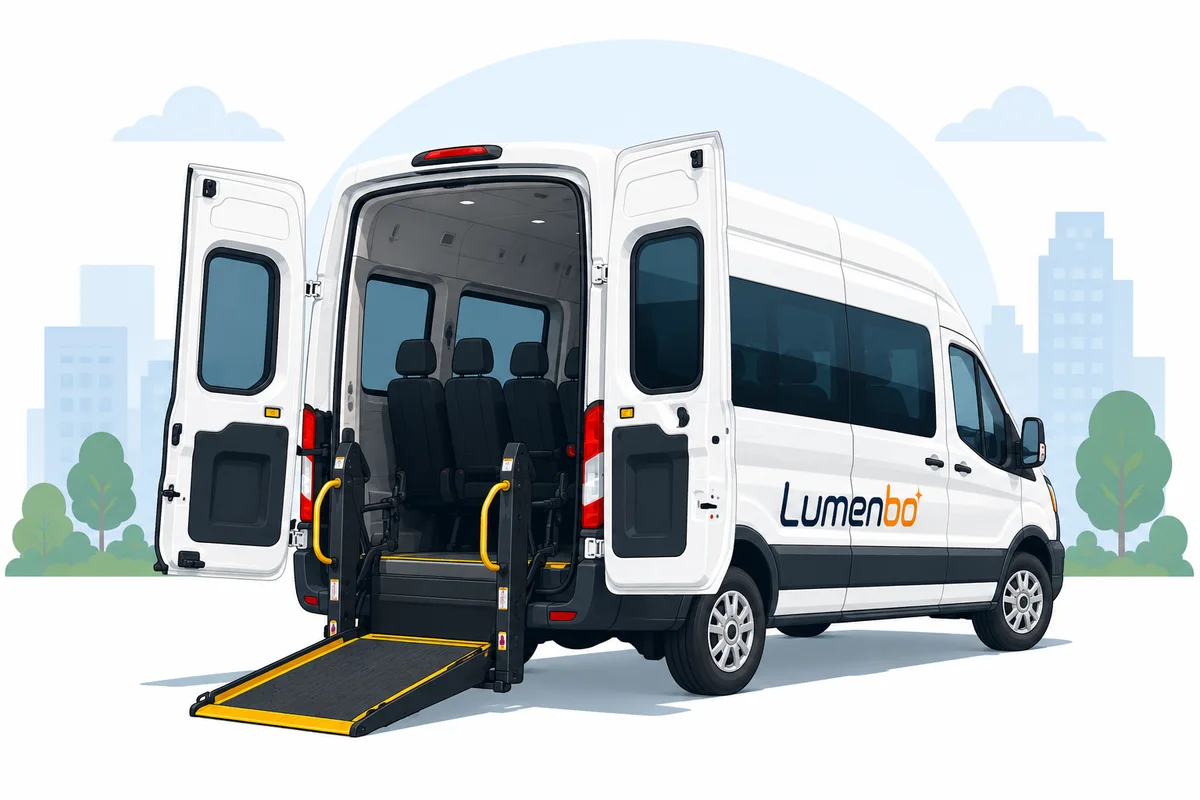
The honest answer to "how much does NEMT insurance cost?" is: it depends — and anyone who gives you a flat number before seeing your vehicles and drivers is guessing. But the drivers of the cost are knowable, and understanding them is how you keep your premium in check without under-insuring. Here's what moves the number for Tennessee and Georgia providers.
What actually drives your premium
- Vehicle and driver count. More of either means more exposure.
- Driver records (MVRs). The single biggest lever. Clean records keep you insurable and affordable; a couple of bad ones can spike the premium or get you declined.
- Required liability limit. A $1M combined single limit (the common broker requirement) costs more than state-minimum limits — but see the warning about over-buying below.
- Service type. Ambulatory is rated lowest; wheelchair a bit higher (converted vehicle value + securement exposure); stretcher highest. See the wheelchair transportation guide.
- Vehicle values. Physical damage scales with what your vans (and lift/ramp conversions) are worth.
- Service area / radius. Local in-town routes look different than long intercity runs.
- Loss history. Prior claims follow you.
- State. Georgia's firmed-up market currently prices higher than it did a couple of years ago.
The scaling advantage most providers miss
Here's the lever brokers won't explain: growth lowers your cost per vehicle. Each van adds auto premium, but several required coverages are once per policy, not per vehicle —
- General liability (one policy covers the operation),
- the abuse & molestation (SAM) endorsement or E&O, and
- hired & non-owned auto (a contractual requirement whether you have one van or ten).
So when you grow from 1–2 vans to 5–6, those fixed pieces spread across more vehicles and each van gets cheaper to insure. It's one of the few reliable ways to make the economics work — and it's why it's frustrating that brokers spend their energy recruiting new single-vehicle operators instead of helping existing providers scale. A one- or two-van operation carries the whole fixed cost alone; a small fleet shares it.
Don't buy your way into trouble
The flip side of "carry the right limits" is don't over-buy. We regularly see new providers told by a broker rep that they need a $5,000,000 auto limit. For standard local NEMT that's normally wrong — the coverage is hard to get, wildly expensive, and usually not actually required. Overbuying can make a viable business unaffordable overnight. Match your limits to your actual contract, confirmed by a licensed agent, not to a number someone repeated over the phone. (More in the broker requirements guide.)
How to lower your premium (the real levers)
- Hire and keep clean-MVR drivers. Nothing else moves the needle as much.
- Right-size your limits to the contract — not inflated, not under.
- Scale intentionally so fixed costs spread across more vehicles.
- Document safety and securement practices — underwriters reward it.
- Protect your loss history — a clean record compounds in your favor.
Get a real number
The only way to know your cost is a quote built on your actual vehicles, drivers, and required limits. Start a quote with Lumenbo and we'll match you with one licensed agent who prices NEMT correctly — and won't sell you coverage you don't need. Back to the NEMT insurance guide anytime.
What is Lumenbo? Lumenbo is an insurance matching platform that connects people with one licensed local independent agency — and the software those agencies run on. Lumenbo is not an insurance carrier and not an insurance agency. Your Lumenbo-matched agent is a licensed agent at that partner agency, and they stay your point of contact.
Frequently asked
How much does NEMT insurance cost?
It varies too much for a single honest number — it depends on your vehicle and driver count, required liability limit, service type (ambulatory vs. wheelchair vs. stretcher), MVRs, vehicle values, service area, and loss history. Anyone quoting a flat figure before seeing your operation is guessing. A quote against your actual vehicles and drivers is the only real answer.
Why does adding a vehicle not double my premium?
Because several required coverages are once-per-policy, not per-vehicle: general liability, the abuse & molestation (SAM) endorsement or E&O, and hired & non-owned auto. Each new van adds auto premium, but those fixed pieces spread across more vehicles — so your cost per van typically drops as you grow from 1–2 to 5–6.
How can I lower my NEMT insurance cost?
Hire and keep clean-MVR drivers (the single biggest lever), carry the limits your contract actually requires (not an inflated number), scale thoughtfully so fixed costs spread across more vehicles, document your safety and securement practices, and keep a clean loss history. Cutting real coverage to save money usually backfires.
Is NEMT insurance more expensive in Georgia?
It has firmed up. Georgia's tort-reform environment pushed liability pricing higher and led some carriers to pull back from certain passenger transport (especially charter van/bus). Wheelchair and ambulatory NEMT is still being written, but rates are higher than they were — which is why more GA providers are shopping.
Should I buy the highest limit I can to be safe?
No. Over-buying — especially chasing a $5M auto limit a broker rep mentioned — can be so expensive it makes the business unviable, and it's usually not required. Match your limits to your actual contract, verified by a licensed agent.
Ready to get matched? One licensed local agent. No shared leads, no spam.
Start your quote
This article is general information for education, not insurance advice or a quote. Coverage, availability, and rules vary by insurer and by state.