Learn / Non-Emergency Medical Transport (NEMT)
Starting a NEMT Business: The Insurance You Need Before Your First Ride
Updated 2026-07-06 · reviewed by a licensed agent
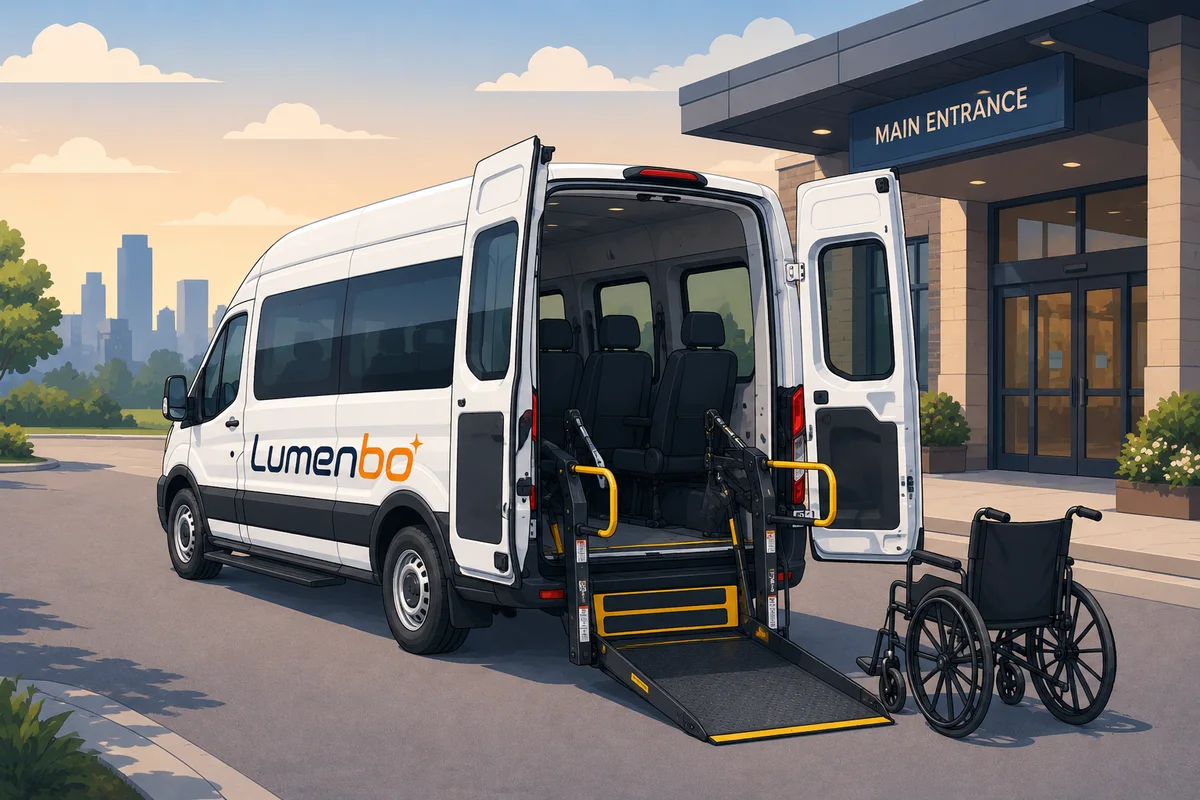
Thinking about starting a non-emergency medical transport business in Tennessee or Georgia? Insurance is usually the first real gate between "I have a van" and "I'm getting paid for rides" — the broker won't activate you without the right certificate. Here's exactly what you need before your first ride, in the order it matters.
First, understand the path to your first paying ride
New NEMT providers in Tennessee and Georgia almost always start by joining a broker network — Verida or Tennessee Carriers in Tennessee, Verida in Georgia, or Modivcare in other states. The broker checks whether it needs providers in your area, interviews you, and — if accepted — hands you a provider agreement with an insurance exhibit: the list of coverages and limits you must show on a certificate before you carry your first member.
That exhibit, not a blog post and not a broker rep's phone estimate, is the final word on what you must buy. Everything below is what those exhibits typically require.
The insurance you must have before your first ride
1. Commercial auto liability — rated for passenger transport. The core requirement, typically a $1,000,000 combined single limit (CSL). Two traps here. First, personal auto won't work — personal policies exclude carrying passengers for pay, so the moment you transport a Medicaid member for compensation, a personal policy covers nothing on that trip. Second, not every commercial auto policy works either: it has to be written for for-hire passenger transport. A policy rated for "contractor pickup" that happens to be on a van isn't the same thing, and a claim is the wrong time to find out.
2. General liability. Commonly $1M per occurrence / $2M aggregate. This is the non-driving exposure — a rider slips getting to the vehicle, an injury during boarding that isn't an auto claim.
3. Hired & non-owned auto. Broker contracts require it even though a one-van operator rarely "uses" it. It's inexpensive and usually attaches to your other coverage.
4. Sexual abuse & molestation (SAM) endorsement and/or professional liability. Required by some contracts, strongly advisable in all cases: NEMT work means physically helping people in and out of vehicles and wheelchairs, and this is the coverage built for the claims that exposure can produce.
5. Workers' compensation — when you hire. Owner-operators driving solo often aren't required to carry it yet; the requirement kicks in with employees under state law. Plan for it in your growth budget.
Finally, your certificate must carry the exact additional-insured wording from your broker agreement — brokers reject certificates over wording all the time, which delays your activation date.
What year one really costs (and why it gets better)
Two honest warnings and one piece of good news.
The warnings: your first year is the most expensive you'll ever pay, because carriers price a new venture with no claims history at a premium — plan on several thousand dollars per vehicle for the auto policy alone. And wheelchair-equipped vans rate higher than ambulatory sedans — though wheelchair transport also pays providers meaningfully better per trip, which is why it's usually worth it.
The good news: costs don't scale the way you'd fear. General liability, SAM/professional liability, and hired & non-owned are largely once-per-policy costs, so each van you add is cheaper to insure than your first. A clean year or two of operating history helps too. The full breakdown is in what NEMT insurance costs.
The startup overbuying trap
New providers are the #1 target for the "$5 million" myth — a broker rep tells a brand-new operator they need a $5M auto limit. For standard local ambulatory and wheelchair NEMT that is normally categorically wrong: the contract typically requires the standard $1M CSL, and excess liability over NEMT auto is so hard to place and so expensive that it would eat a startup's entire margin. Broker reps schedule rides; they aren't licensed insurance agents. Get the requirement in writing and have a licensed agent confirm it before you spend a dollar more than the contract requires.
Your pre-launch insurance checklist
- Apply to your broker(s) first — Verida and/or Tennessee Carriers in Tennessee, Verida in Georgia — and get the insurance exhibit from the provider agreement.
- Line up an agent early so quotes are ready when your approval comes through — the gap between "approved" and "insured" is the gap between approved and paid.
- Buy commercial auto rated for passenger transport at the exhibit's limit (usually $1M CSL) — never personal auto, never a mis-rated commercial policy.
- Add GL, hired & non-owned, and SAM/professional liability, with the exhibit's exact additional-insured wording on the certificate.
- Budget workers' comp for your first hire.
Get a startup NEMT quote
Lumenbo focuses on Tennessee and Georgia first, matching you with an agent who quotes new-venture NEMT every week and knows exactly what Verida, Tennessee Carriers, and Modivcare certificates need to say.
Start a quote with Lumenbo and we'll match you with one licensed local agent — no call center, no shared leads. For the fundamentals of every coverage above, start with the NEMT insurance guide.
What is Lumenbo? Lumenbo is an insurance matching platform that connects people with one licensed local independent agency — and the software those agencies run on. Lumenbo is not an insurance carrier and not an insurance agency. Your Lumenbo-matched agent is a licensed agent at that partner agency, and they stay your point of contact.
Frequently asked
What insurance do I need to start a NEMT business?
Before your first paid ride you need commercial auto liability rated for for-hire passenger transport (typically a $1,000,000 combined single limit), general liability, and hired & non-owned auto. Workers' comp applies once you have employees, and a sexual abuse & molestation (SAM) endorsement or professional liability is strongly advisable because you physically assist riders. Your broker contract's insurance exhibit is the final word on limits and wording.
Can I use my personal auto insurance for NEMT?
No. Personal auto policies exclude carrying passengers for compensation. The moment you transport a Medicaid member for pay, a personal policy provides no coverage for that trip — and the broker won't approve you without a commercial certificate anyway. Commercial auto rated for passenger transport is the non-negotiable first purchase.
How much does NEMT insurance cost for a startup?
Your first year is typically the most expensive you'll ever pay, because carriers price new ventures without a claims history at a premium — plan on several thousand dollars per vehicle for the auto policy alone, with wheelchair-equipped vans rating higher than ambulatory sedans. Rates generally improve as you build clean years. Exact numbers depend on your vehicles, radius, and drivers.
Do I buy insurance before or after applying to a broker like Verida or Modivcare?
Apply first, buy second — but line up your agent early. Brokers like Verida, Modivcare, and Tennessee Carriers review whether they need providers in your area before onboarding you. Once you're accepted, you'll need a certificate of insurance matching their exhibit before you carry your first member, so having quotes ready shortens the gap between approval and revenue.
Do I need $5 million in coverage to start a NEMT business?
Almost certainly not. Standard broker contracts require a $1M combined single limit on auto liability. The $5M figure sometimes quoted by broker reps is normally categorically wrong for local ambulatory and wheelchair work — excess coverage over NEMT auto is hard to place and priced far beyond a startup's budget. Verify the written requirement before you buy.
Ready to get matched? One licensed local agent. No shared leads, no spam.
Start your quote
This article is general information for education, not insurance advice or a quote. Coverage, availability, and rules vary by insurer and by state.