Learn / Non-Emergency Medical Transport (NEMT)
NEMT Insurance in Tennessee: Verida, Tennessee Carriers, and What Your Contract Actually Requires
Updated 2026-07-06 · reviewed by a licensed agent
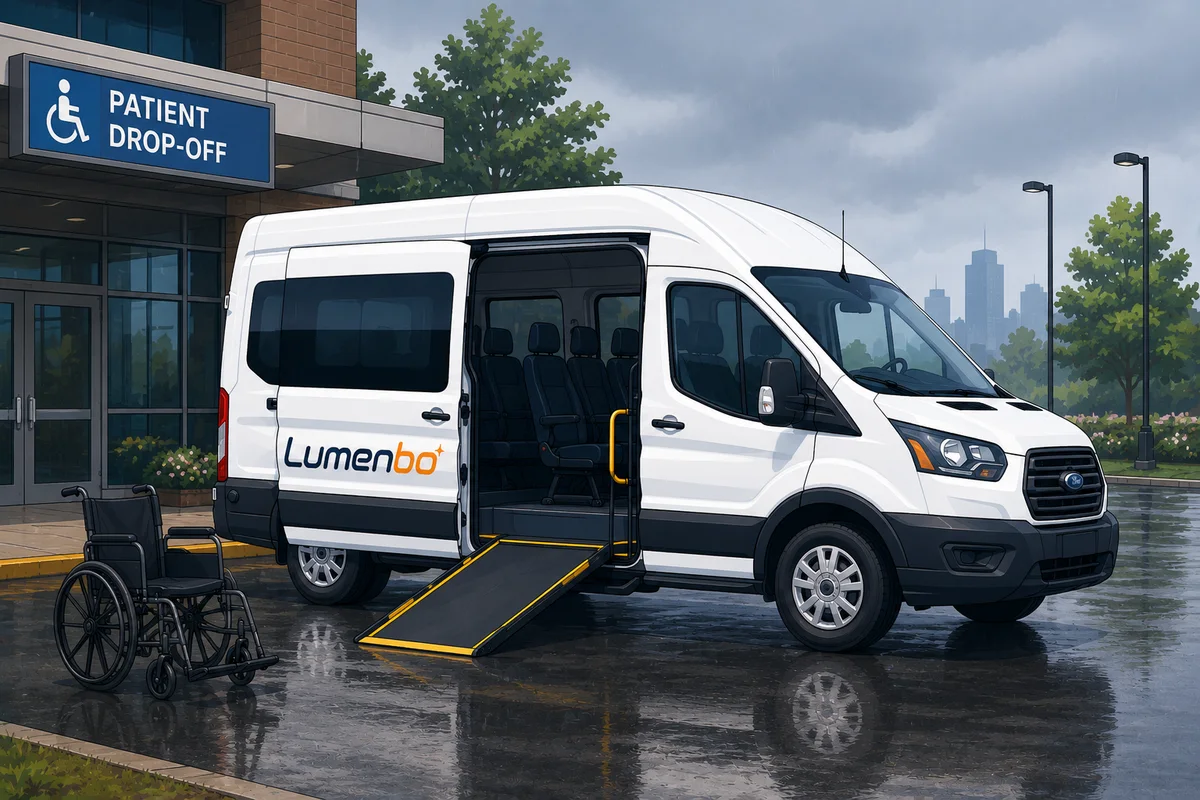
If you run non-emergency medical transport in Tennessee, your insurance requirements come from your broker contract — and in Tennessee that means one (or both) of two names: Verida and Tennessee Carriers. Here's how the state is set up, what each broker expects, and how to meet the requirement without paying for coverage your contract never asked for.
How Tennessee NEMT is organized
TennCare (Tennessee's Medicaid program) delivers NEMT through its managed-care health plans, and the health plans route rides through two statewide brokers:
- Verida (formerly Southeastrans) — coordinates transportation for BlueCare and TennCare Select members.
- Tennessee Carriers — coordinates transportation for UnitedHealthcare Community Plan and Wellpoint members, and describes itself as Tennessee's largest NEMT broker.
That split matters for your business plan: a member's ride goes through the broker attached to their health plan, not the one you happen to prefer. That's why many Tennessee providers — from Memphis to Nashville to Chattanooga to the Tri-Cities — contract with both brokers to keep their vans full across the whole TennCare population.
(If you also run trips across the state line, Georgia works differently — one broker statewide. See the Georgia NEMT guide.)
What the contracts actually require
Both brokers' provider agreements follow the same basic insurance shape:
- Commercial auto liability — typically a $1,000,000 combined single limit (CSL), on a policy rated for for-hire passenger transport. This is the big one, and the one your certificate gets checked against.
- General liability — commonly $1M per occurrence / $2M aggregate. This covers the non-driving exposure: a passenger falls in your lobby, an injury while helping someone to the door.
- Hired & non-owned auto — contractually required even though most small providers never "use" it.
- Workers' compensation — where Tennessee law requires it for your employee count.
- Additional insured + certificate wording — the broker (and sometimes the state or health plan) must be named, with the exact wording from your agreement.
Because you're physically helping riders in and out of vehicles and wheelchairs, a sexual abuse & molestation (SAM) endorsement and/or professional liability is either required or strongly advisable — it's the coverage that responds to the claims this business is actually exposed to. The full breakdown is in the broker requirements guide.
The $5 million myth — Tennessee edition
The same pattern we see in Georgia shows up in Tennessee onboarding calls: a broker rep tells a new one-van operator they need a $5,000,000 auto limit. For standard local ambulatory and wheelchair NEMT that is normally categorically wrong. Excess liability over NEMT auto is hard to place and extremely expensive — often more than a small provider's whole margin — and the contract usually requires the standard $1M CSL, nothing more.
Broker reps schedule rides; they aren't licensed insurance professionals. Before you buy anything, pull the insurance exhibit from your Verida or Tennessee Carriers agreement and have a licensed agent read it with you.
One policy, two brokers
Here's the practical good news: working with both brokers usually does not mean buying insurance twice. One properly structured commercial auto + general liability program can satisfy both contracts — your agent simply issues a separate certificate of insurance to each broker, each with that broker's required additional-insured wording. What you're buying is one program; what each broker sees is their own certificate.
And if you're growing, remember the scale math: general liability, SAM/professional liability, and hired & non-owned are largely once-per-policy costs, so going from 1–2 vans to 5–6 makes each vehicle meaningfully cheaper to insure. The numbers are in what NEMT insurance costs — and if wheelchair transport is on your menu, that niche pays better too.
What Tennessee providers should do now
- Pull the insurance exhibit from each broker agreement you hold (or are onboarding into) and match limits to what's written — not to a number quoted on the phone.
- Right-size. The standard $1M CSL is usually the real requirement.
- Get both certificates from one program if you work Verida and Tennessee Carriers — don't let anyone sell you duplicate policies.
- Ask about SAM/professional liability — it's the exposure this work actually carries.
Get a Tennessee NEMT quote
Lumenbo focuses on Tennessee (and Georgia) first, matching you with an agent who knows both brokers' requirements and the markets still writing wheelchair and ambulatory NEMT here.
Start a quote with Lumenbo and we'll match you with one licensed local agent — no call center, no shared leads. New to the coverage itself? Start with the NEMT insurance guide.
What is Lumenbo? Lumenbo is an insurance matching platform that connects people with one licensed local independent agency — and the software those agencies run on. Lumenbo is not an insurance carrier and not an insurance agency. Your Lumenbo-matched agent is a licensed agent at that partner agency, and they stay your point of contact.
Frequently asked
Who are the NEMT brokers in Tennessee?
TennCare NEMT runs through two statewide brokers, split by health plan: Verida (formerly Southeastrans) coordinates rides for BlueCare and TennCare Select members, and Tennessee Carriers coordinates rides for UnitedHealthcare Community Plan and Wellpoint members. Many Tennessee providers contract with both to keep their vehicles full.
What insurance does Verida require for Tennessee providers?
Typically commercial auto liability at a $1,000,000 combined single limit, general liability, hired & non-owned auto, workers' comp where required, and naming the broker as additional insured. Your exact requirements are in the insurance exhibit of your provider agreement — always verify there rather than relying on what a rep says over the phone.
What insurance does Tennessee Carriers require?
Requirements are broadly similar to Verida's — commercial auto liability (commonly a $1M combined single limit), general liability, and additional-insured wording on your certificate. Because the two brokers serve different TennCare health plans, providers who work with both need certificates issued to each; the underlying policies are usually the same.
Do I need $5 million in auto liability for NEMT in Tennessee?
Almost never for standard local NEMT. Excess liability over NEMT auto is hard to place and extremely expensive, and TennCare broker contracts typically require the standard $1M combined single limit. If someone quotes you $5M, ask to see it in writing in the contract — it usually isn't there.
Can I drive for both Verida and Tennessee Carriers with one insurance policy?
Usually yes. One properly built commercial auto and general liability program can satisfy both brokers — you just need separate certificates of insurance naming each broker (and any other required parties) as additional insured. A licensed agent can issue both certificates from the same policies.
Ready to get matched? One licensed local agent. No shared leads, no spam.
Start your quote
This article is general information for education, not insurance advice or a quote. Coverage, availability, and rules vary by insurer and by state.